
Anjali Persad on Bipolar II, Mental Health in the Indo-Caribbean Identity and a Hopeful Future
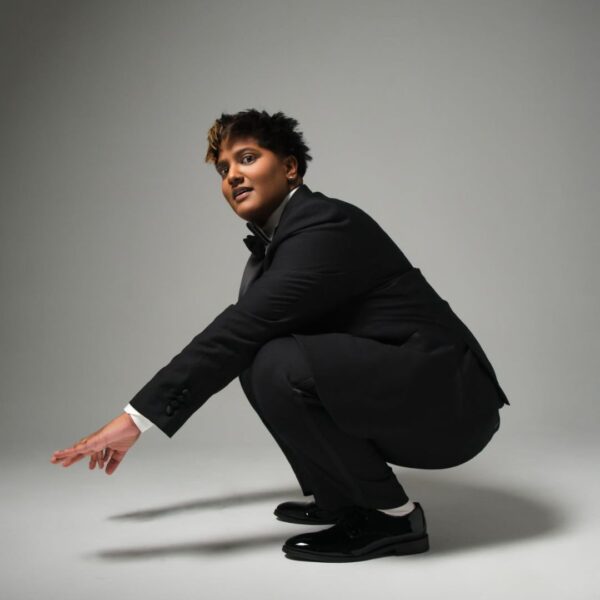
You may have seen her on your Instagram feed. She’s the larger-than-life Indo-Trinidadian influencer known for her viral videos, comedic skits, and the ability to bring a smile to people’s faces. Meet Anjali Persad. In this sit-down interview with Caribbean Therapists Organization Anj gets vulnerable and personal about her mental health journey.
Anj grew up in St. Petersburg, Florida., where her Trinidadian immigrant parents raised her and her older sister, Shelina. She was diagnosed with bipolar II after leaving the Army, during a period when life had become difficult to hold together. She was navigating the aftermath of military service, the early isolation of COVID-19, resurfacing memories and trauma, and the pressure of being both the first person in her family to join the Army a path she describes as highly nontraditional in many Caribbean households and the first openly gay child in her family
I crashed out, she says.
Her family could see that she was struggling. “You want to talk to someone? We can’t help you,” they asked her. That conversation led her to therapy, where she began unpacking more than she had expected. What started with treatment for bipolar II, anxiety and ADHD grew into a longer process of understanding the effects of trauma, including complex PTSD and OCD. The Army trauma, she says, made other trauma resurface, including experiences from childhood she had pushed so far away that she had forgotten them.

For a time, treatment meant talk therapy alongside multiple medications. At one point, Anjali was taking nine medications a day, split between morning, afternoon and evening. She says the process helped her survive a difficult period and gave her tools to manage moods while she was in therapy. But eventually, she reached a point where she felt disconnected from herself.
I also realized I lost my personality, my essence, what made me.
That realization did not make her journey simple. It marked the beginning of a different relationship with her diagnoses, one rooted less in fear and more in learning how to understand herself. Anjali says that when she was first diagnosed, she became intensely focused on every mood, thought and feeling. She labeled everything through the lens of bipolar II, trying to be self-aware and prepared for therapy. Looking back, she feels that constant self-monitoring made things harder.
View this post on Instagram
For her, a diagnosis became something to live with, not something to become.
You are not bipolar. You just have it. Just like I am Caribbean: it is the same thing.
That distinction matters, especially in communities where diagnoses are often misunderstood, minimized or turned into jokes. Anjali speaks openly about the ways mental health language can get lost in Caribbean family life. A relative who cannot sit still may be casually called ADHD. Someone who cleans compulsively may be joked about as having OCD. But beneath the humor, there may be real experiences that have never been named, supported or treated.
Her own family initially found her diagnosis disturbing, she says, partly because of how society has portrayed bipolar disorder. Her parents did not necessarily see her mood changes as symptoms. To them, it was simply Anj being Anj. Over time, she says, conversations with her therapist helped them become more comfortable with therapy and medication as tools rather than something to fear.
Anjali recognizes that many Caribbean families are still learning how to have these conversations. In homes shaped by migration, sacrifice, survival and generational expectations, emotional distress can be dismissed quickly. A child says they are tired and is told they have not done enough to be tired. Someone expresses sadness and is told to toughen up, stop crying or go to their room. A behavior that needs care can be treated as disrespect, laziness, drama or simply “how people are.”
She sees a shift in younger Caribbean families, particularly among those raising children outside the Caribbean. She has watched cousins speak with their children through disagreement without shouting, intimidation or dismissal. She sees the possibility of a generation that can ask questions, explain feelings and stay present with one another even when conversations are uncomfortable.
I think it’s better to have that conversation than to be dismissive.
That does not mean culture itself is the problem. Anjali speaks with love about being Indo-Caribbean and with gratitude for the perspective she has gained as a first-generation American. She also believes that the community has to be honest about the ways certain patterns can become harmful when they go unspoken. Anxiety and survival mode can hide behind the pressure to keep a clean home, cook for guests, maintain appearances or never challenge an elder. Drinking culture, substance use, eating disorders and family trauma may all exist in silence when people do not feel safe enough to name what is happening.
For Anjali, openness is not about making a diagnosis the center of someone’s identity. It is about refusing to let shame determine whether people get support. It is about recognizing that trauma can show up in many forms and that family histories deserve to be discussed, even when there is discomfort, guilt or generational shame attached to them.
Her own healing has been supported by people who knew her before, during and after some of her hardest moments. Childhood friends, college friends and family have helped keep her grounded. She remembers filming a TikTok during one of her lowest periods, while crying to a nursing teacher on Zoom. The video went viral, reaching millions of viewers and drawing thousands of comments from people who related to the vulnerability of the moment. For Anjali, it was a reminder that many people are carrying similar experiences quietly.
Today, she brings that honesty into her creativity and comedy. She sees her neurodivergence and mental health journey as connected to the risks she has taken in her life, including leaving nursing school to pursue her creative path before she had certainty about where it would lead. She does not romanticize the pain of mental illness, but she refuses to believe it has erased her capacity, ambition or individuality.
She wants people to know that reaching out does not have to begin with the perfect words, a formal diagnosis or a therapist’s office. It can begin with telling someone, “I’m not okay.” It can begin with answering a phone call, checking on a person whose post feels concerning, or choosing care over gossip.
If you are open enough with your community about your struggles, thoughts, and feelings, the right people will show up for you.
For loved ones, Anjali’s message is equally direct: pay attention. Do not turn someone’s visible distress into entertainment. Do not discuss their posts, appearance or behavior with everyone else before checking in with them. Sometimes support is not a lecture, a solution or the right clinical language. Sometimes it is simply answering the phone and being there.
Anjali’s story is not about becoming free from every difficult feeling. It is about learning to face feelings instead of running from them, to understand what they are asking for, and to build a life in which a diagnosis is only one part of a much fuller person.